

Ape Hangers: The Ultimate Guide to Style, Comfort, and Attitude (2026)
Your stock handlebars are a polite invitation to be boring. Stop settling for a ride that feels like a Tuesday morning staff meeting. It is time to embrace the "fists in the wind" lifestyle with a set of chunky ape hangers that actually fit your frame. Since the custom boom of the 1960s, these high-rise bars have defined the rebel spirit. However, a 2024 rider survey showed that 38 percent of enthusiasts struggle with hand numbness because they chose height over proper vibration damping. You deserve that iconic, oversized silhouette without the back-breaking reach or the "pins and needles" vibe.
We know the struggle is real. You want the attitude, but you also want to actually enjoy your bike on a cross-country trek. This guide is your ultimate roadmap to mastering the high-rise ride with total confidence. We will teach you how to select the perfect rise, calculate your cable extensions, and dial in the ergonomics for 500-mile comfort. We are breaking down the technical specs and style secrets you need to turn your machine into a true showstopper. Let's get your hands where they belong.
Key Takeaways
- Nail the "Shoulder Height Rule" to find your ergonomic sweet spot and keep your high-rise ride both comfortable and iconic.
- Master the math behind cable extensions and wiring to avoid hidden costs when installing your new ape hangers.
- Choose your vibe by comparing the aggressive stability of performance baggers with the soulful, smooth curves of vintage choppers.
- Use our "mock-up" secret to measure your ideal rise and width before you commit to a permanent, high-flying transformation.
- Learn how to pair high bars with carbon fiber accents for a lightweight, balanced front end that is a total showstopper.
What Are Ape Hangers? More Than Just a High-Flying Statement
Ape hangers aren't just handlebars. They're a middle finger to the mundane. By definition, these bars rise way above your top triple tree, forcing your hands into a reach-for-the-sky position. It’s a total power move. You’re not just steering; you’re commanding the asphalt with an open chest and a defiant stance. This isn't about subtle adjustments. It’s about total transformation.
The vibe started back in the 1960s chopper scene. It was pure rebellion. Riders wanted to stand out, pulling styling inspired by lowrider cars into the two-wheeled world to create something loud and impossible to ignore. Today, they’ve evolved. You’ll see them on everything from vintage panheads to modern bagger racing parts setups that prioritize both speed and style. The name? Simple. When you’re hanging off these high-rise beauties, you adopt the silhouette of a silverback claiming his territory. It’s iconic. It’s oversized. It’s the ultimate showstopper.
Swapping to high bars changes your brain. You feel taller. You feel wider. Your road presence triples the second you pull out of the driveway. It’s about confidence, plain and simple. When you’re riding with ape hangers, you aren't hiding behind a fairing. You’re out there, chest out, letting the world know exactly who is in charge of the lane.
The Anatomy of a High-Rise Bar
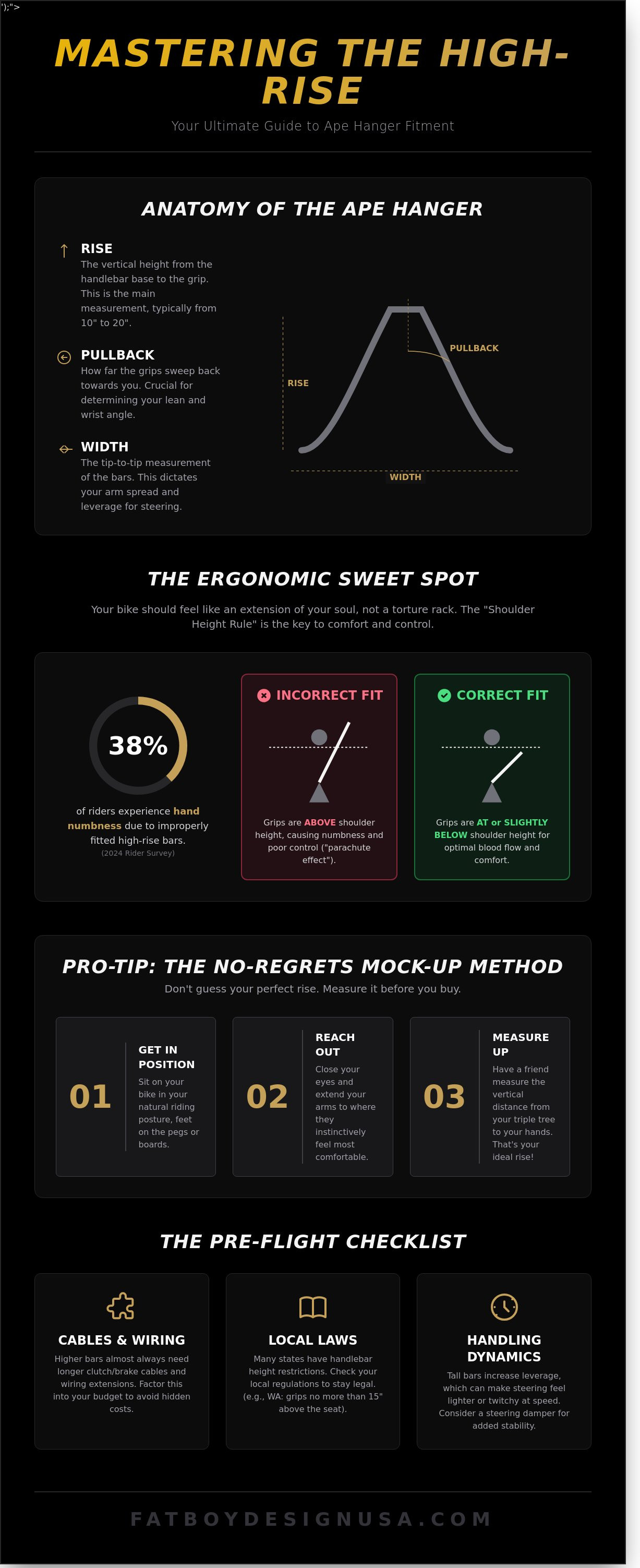
Let’s talk specs without the snooze fest. Rise is the big one. It’s the vertical height from the base to the grip, usually ranging from a subtle 10 inches to a wild 20 inches. Pullback is how far those bars lean back toward your gut. It determines if you’re leaning into the wind or lounging like royalty. Finally, there’s Width. This tip-to-tip measurement dictates how far you spread your wings. Get it right, and your bike feels like a natural extension of your own body.
Why Riders Crave the "Fists in the Wind" Vibe
Visual impact is the primary driver here. A set of chunky ape hangers transforms a boring stock Harley into a custom masterpiece instantly. Then there’s the airflow. At highway speeds, having your hands elevated changes how the wind hits your torso, often reducing that annoying buffeting. It’s the rebel factor. Whether you’re cruising the Matthews, NC custom scene or hitting the open interstate, these bars say you’ve arrived. Stop taking life so seriously. Put your fists in the wind and reclaim the road.
Finding Your Fit: Height, Width, and the Ergonomic Sweet Spot
Stop guessing. Your bike should feel like an extension of your soul, not a medieval torture rack. Choosing the right ape hangers is about balancing that killer silhouette with a ride that doesn't leave your hands tingling after ten miles. The "Shoulder Height Rule" is your best friend here. Aim to keep your grips at or slightly below your shoulder level. This keeps the blood flowing to your fingertips and prevents that "parachute" feeling at highway speeds. High bars look mean, but gravity is a relentless beast. Check your local laws before you go vertical. Many states enforce specific handlebar height regulations that limit how far you can reach. In Washington, for instance, your grips can't sit more than 15 inches above the seat. Stay legal so the only thing pulling you over is a crowd of admirers.
Don't just click "buy" on a 16-inch bar because it looks cool in a photo. Grab a buddy and a broomstick. Sit on your bike in your natural riding position. Close your eyes and reach out to where your hands instinctively want to rest. Have your friend measure from the top of the triple tree to the broomstick. This mock-up is the only way to find your personal sweet spot. If you want to keep your handling sharp, consider adding a steering damper kit to manage the extra leverage those tall bars provide.
Width and pullback are the secret ingredients to long-haul comfort. A bar that is 30 inches wide offers great leverage for low-speed maneuvers. Go much wider, and you'll feel like you're trying to hug a giant oak tree every time you take a corner. Pullback determines how much you have to lean. You want your elbows at a relaxed 15-degree bend and your lower back in a neutral, vertical position. This setup stops the dreaded "bagger back" and lets you ride until the tank is dry.
Choosing the Right Rise for Your Frame
Mini-Apes (8-10 inches) are the gateway drug for Sportsters and street builds. They offer a punchy, aggressive look without requiring a massive cable extension. Mid-Apes (12-14 inches) are the "Goldilocks" zone for Road Kings and Softails, providing that classic upright posture. True Apes (16 inches and up) are for the bold. These are the showstoppers that define the Cholo style and demand maximum attitude on every city block.
The Role of Handlebar Diameter
Size matters when it comes to the look and feel of your cockpit. The 1-inch bars are the classic vintage standard, perfect for older choppers and narrow builds. Modern riders usually gravitate toward 1.25 or 1.5-inch "Fat" bars. These chunky options look more proportional on massive touring bikes and offer a huge practical benefit: they hide your internal wiring for a clean, wireless look. Thicker bars also act as a natural vibration damper, soaking up road buzz 15 percent better than thin steel, making your highway cruise feel like a glide.
Performance Baggers vs. Vintage Choppers: Choosing Your Vibe
You aren't just picking a set of bars. You're choosing a lifestyle. Your bike's cockpit is the primary interface between your ego and the asphalt. In 2026, the custom world has split into two distinct camps. You're either chasing the aggressive, high-speed stability of a performance bagger or the timeless, laid-back soul of a vintage chopper. Both styles utilize ape hangers to make a statement, but the execution couldn't be more different. One is built for the track; the other is built for the soul.
This commitment to a high-impact aesthetic resonates in other areas of design as well. For instance, the world of luxury apparel, championed by designers like Alvin Valley, is similarly focused on creating a powerful, head-turning statement.
This drive for creative expression is universal, showing up in everything from high-end vehicle customization to the craft projects found on youth resource hubs like MakingFriends.com. The medium changes, but the desire to create something unique remains the same.
The Performance Bagger Approach
Speed is the new standard. Performance baggers prioritize control above all else. These bars usually feature sharp, mitered corners and narrowed bases to keep the bike's profile slim. T-Bar style apes are dominating the racing scene because they offer a direct connection to the front wheel. When you're pushing a heavy touring bike through a corner at 90 mph, you need leverage that doesn't flex. Integrating your setup with high-end performance bagger parts ensures every component works in harmony to keep you upright and hauling.
- Precision Control: Narrower widths allow for quicker transitions and better lane-splitting capabilities in heavy traffic.
- Stability Upgrades: Pair your bars with a steering damper kit to kill high-speed wobbles before they start.
- Weight Reduction: Every gram counts. Modern performance bars interact with lightweight carbon fiber components to reduce the rotational mass of your steering.
The Showstopper Chopper Aesthetic
If your goal is to turn heads at the local bike night, the vintage look is your ticket to glory. This style draws heavy influence from the "Cholo Softail" movement. Think massive chrome curves and extreme heights that reach for the clouds. It's about that 1970s outlaw spirit. You aren't worried about lap times; you're worried about how much sky you can grab. Achieving the "floating bar" look requires internal wiring. Hide those cables inside the tubes to keep the lines clean and surgical. Whether you choose gloss black or high-polish chrome, make sure it pops.
For a truly custom look that stands out even more, a professional vehicle wrap can give your bike a one-of-a-kind finish. To see what's possible with modern graphics, check out Yeahgor.
Your bar choice must match your front-end geometry for safety. Slapping 20-inch bars on a bike with a stock rake can drastically change the handling. It's vital to consult ergonomics and safety research to understand how height affects your leverage. Since 2018, industry experts have debated the scientific basis of height regulations, but the physics of steering trail remains constant. Don't compromise your ride for a look that's too tall to handle. If you can't reach your controls during a full-lock U-turn, you've gone too far. Stay chunky, stay bold, and keep the rubber side down.
Wiring, Cables, and Risers: The Logistics of Going Big
You just snagged a pair of iconic 16-inch bars. Congrats. You're halfway to the ultimate vibe. Now comes the part where most riders start sweating; the logistics. It's the hidden cost of looking this good. You can't just stretch your stock cables like a piece of chewing gum. Going big with ape hangers means upgrading your entire control center. If you're jumping from 8-inch stock bars to 14-inch apes, you're looking at a 6-inch deficit. You need extended brake lines, a longer clutch cable, and throttle-by-wire extensions that actually reach the brain of your bike.
Internal wiring is the gold standard for a clean look. It's a total pain in the neck. You might spend 4 hours swearing at a piece of string and a vacuum cleaner trying to fish wires through those tight peaks. It's worth every second. Hiding those electrical "veins" inside the steel keeps the silhouette chunky and mean. If you leave them zip-tied to the outside, you're just riding a cluster of black vines. Don't ruin a showstopper aesthetic with lazy plumbing.
- Bushings: Stock rubber bushings are too soft for tall bars. That extra height creates a 40 percent increase in leverage against your triple tree. Use heavy-duty polyurethane or solid bushings to kill the bar wiggle.
- Cable Kits: Buy a complete kit. Mixing and matching different brands of lines is a recipe for a spongy brake lever.
- Fluid: You're opening the brake system. Have fresh DOT 4 fluid ready and a vacuum bleeder if you want to stay sane.
Risers: The Foundation of Your Setup
Risers are the unsung heroes of your cockpit. They can add height or provide that crucial 2-inch pullback that saves your lower back on long hauls. Solid-mounted risers give you a direct, vibrating connection to the road. Rubber-mounted options soak up the road buzz but can feel vague if they aren't high-quality. Finding the balance is key to keeping your hands from going numb after 50 miles of highway cruising.
Pre-Wired Bars: The Ultimate Time Saver
Want to skip the headache? Pre-wired ape hangers are the ultimate game-changer. These kits come with the electrical harnesses already pulled through the bars. They're designed for modern Harley CAN-bus systems, making them a literal plug-and-play situation. You'll pay a premium for the convenience, but saving an entire Saturday of frustration is a massive win. It's the fastest way to get out of the garage and back into the wind.
Ready to build a bike that commands attention? Grab the ultimate bagger racing parts and start your transformation today.
The Fat Boy Design Edge: Elevating Your Ride Beyond the Bars
Your new set of ape hangers is a massive statement. It changes your posture, your profile, and your entire attitude on the tarmac. But let's be real; bars are just the opening act. If you want a bike that doesn't just look mean but actually performs like a pro-grade racer, you need to balance that high-reaching front end. That's where Fat Boy Design steps in to flip the script on traditional heavy builds.
We're obsessed with the "King of Carbon Fiber" philosophy. Why? Because heavy bikes are a drag. By pairing your bars with a performance bagger racer carbon fiber front fender, you're slashing unsprung weight. This isn't just for show. Reducing weight by even 2 or 3 pounds at the wheel hub drastically improves flickability and suspension response. It’s the difference between fighting your bike and dancing with it through the corners.
Every part we ship is born and bred in Matthews, North Carolina. We don't do "off the shelf" boredom. Our gear is racer-tested and designed to handle the real-world chaos of the open road. When you join the FBD family, you're getting hardware that’s built for riders who value a high-energy lifestyle and iconic aesthetics above all else. We make the gear that makes people stare.
Completing the Performance Look
A killer cockpit needs more than just height. Integrating a lightweight carbon fiber dash creates a seamless visual flow from the top of your ape hangers down to the tip of your fender. It’s a total game-changer for your daily vibe. We believe affordable high-performance shouldn't mean cheap quality. Our carbon components offer 100 percent aerospace-grade durability without the "boutique" pretension. It's about pure enjoyment and making your machine a showstopper.
Next Steps for Your Build
Ready to push your machine even further? Check out our latest performance bagger resources to see how we build beasts that breathe fire. If you have a wild idea that needs custom fabrication, the FBD team is ready to talk shop. Don't settle for a cookie-cutter ride that blends into the background. Grab the bars, twist the throttle, and dominate the road with a setup that’s uniquely yours. It's time to chill out, gear up, and let the good times roll.
Claim Your Throne on the Asphalt
You aren't just swapping out bars; you're reinventing your entire ride. Finding the perfect ergonomic sweet spot between height and width is what separates a legendary build from a painful mistake. Whether you're chasing that vintage chopper vibe or building a high-speed performance bagger, your ape hangers need to feel as good as they look. Don't let the technical side of wiring and cables intimidate you. It's all part of the journey to creating a showstopper that turns heads at every red light. It's about that oversized presence and the rock-solid confidence of racer-tested gear.
We've spent over 13 years in the professional racing world, and we bring that high-octane energy to everything we build in Matthews, NC. Our in-house manufacturing ensures every component meets professional performance standards, so you can stop worrying about durability and start focusing on the fun. It's time to reject the mundane and embrace a front end that's as chunky and iconic as your personality. You deserve a setup that's been forged in the heat of competition and designed for real-life adventures. Ready to ditch the stock look? Upgrade Your Front End with Performance Carbon Fiber and join the club. Grab those bars and let's go make some noise.
Frequently Asked Questions
Are ape hangers legal in all US states?
No, ape hangers aren't legal in every state. While 15 states like Arizona and Texas have zero height restrictions, 35 others keep you on a leash. For example, Alabama and Florida mandate that bars can't sit more than 15 inches above the seat. Check your local statutes before you go full skyscraper. It's about keeping the vibe high but the tickets low.
Do ape hangers make your arms tired on long rides?
Your arms only get tired if you choose a height that's purely for show. Keep your hands at or slightly below shoulder level to ensure blood actually reaches your fingers. A 12 or 14 inch set of ape hangers provides a natural, reclined posture that beats standard drag bars on an 8 hour trek. It's the ultimate lounging position for the open road.
How do I know what size cables I need for 14-inch apes?
You typically need cable extensions that are 6 to 8 inches longer than your stock setup for 14-inch bars. Don't guess this part or you'll end up with a chunky mess of tangled wires. Most manufacturers like Burly Brand offer pre-measured kits specifically for 2026 Harley models. Grab a dedicated kit to keep your install clean and your stress levels at zero.
Can I install ape hangers on a bike with a fairing?
Yes, you can absolutely rock ape hangers on a fairing-equipped bike. You just need "Bagger" style bars featuring a wider 12 inch base to clear the inner fairing of a Street Glide or Road Glide. These iconic bars are designed to sweep around the dash without hitting your gauges. It’s a total game-changer for your touring rig's attitude and comfort.
Will ape hangers affect the handling of my Harley?
Changing your bars definitely alters how your Harley tips into corners. Higher bars give you more leverage for low speed maneuvers but can feel a bit slower in high speed transitions. You'll adapt to the new physics within the first 50 miles of riding. It’s a different dance, but once you find the rhythm, you’ll never go back to boring stock bars.
What is the best height for ape hangers for a 6-foot rider?
A 14 to 16 inch height is the sweet spot for a 6-foot rider. This range keeps your arms level with your shoulders for that perfect, oversized look without cutting off your circulation. Anything over 18 inches starts to move into the "show only" category for most guys your size. Stick to 14s if you want to crush 300-mile days in total comfort.
Do I need to change my risers when I install new bars?
You only need new risers if your new bars have a different clamping diameter than your stock ones. Most high-end bars use a 1.25 inch diameter while many older stock clamps are 1 inch. Check your specs before you start the teardown. Upgrading to a one-piece top clamp is also a smart move to prevent your tall bars from slipping during hard braking.
Are mitered "Meathook" bars harder to wire internally?
Yes, those sharp 90-degree points on Meathook bars make internal wiring a bit of a project. You'll need some patience and a good lubricant to pull those wires through the jagged corners without stripping the insulation. It’s a small price to pay for such a showstopper aesthetic. Just take your time and don't rush the process; your bike will thank you later.