

How to Care for Carbon Fiber Motorcycle Parts: Keep Your King of Carbon Looking Lethal
Your Harley doesn't just wear carbon fiber. It commands it. That weave is a high-performance flex that screams for respect, but let's be real; nobody wants their bike looking like a bruised banana after a few months in the sun. You spent the cash for that lethal, lightweight look. Now you are stuck wondering if your favorite soap is actually a secret resin-eater. Learning how to care for carbon fiber motorcycle parts shouldn't feel like a high-stakes chemistry final. It is about keeping that visual dominance without the constant anxiety of UV yellowing or minor rock chips ruining your vibe.
We hear you. You want a bike that stays show-ready and parts that never lose their edge. We are going to master the art of maintaining your components so they stay ultra-strong for the long haul. This guide breaks down the smart chemistry and UV defense you need to protect your investment. We will cover everything from fixing minor scuffs to the exact routine that keeps your King of Carbon status intact. It is time to stop babying your bike and start treating it like the racer-tested machine it is. Let's get it.
Key Takeaways
- Treat your carbon like a high-end finish, not just metal, to protect the delicate polymer resin from harsh chemicals and dulling.
- Master how to care for carbon fiber motorcycle parts by ditching the pressure washer in favor of a safe, scratch-free two-bucket cleaning routine.
- Learn to distinguish between harmless surface scuffs and dangerous structural fractures to ensure your high-performance parts stay safe at speed.
- Upgrade to ceramic coatings for the ultimate UV defense, preventing that dreaded yellowing and keeping your bike’s aesthetic visually dominant.
- Choose racer-tested components with built-in UV inhibitors to spend less time babying your bike and more time ruling the road.
Why Carbon Fiber Care is Different from Steel or Chrome
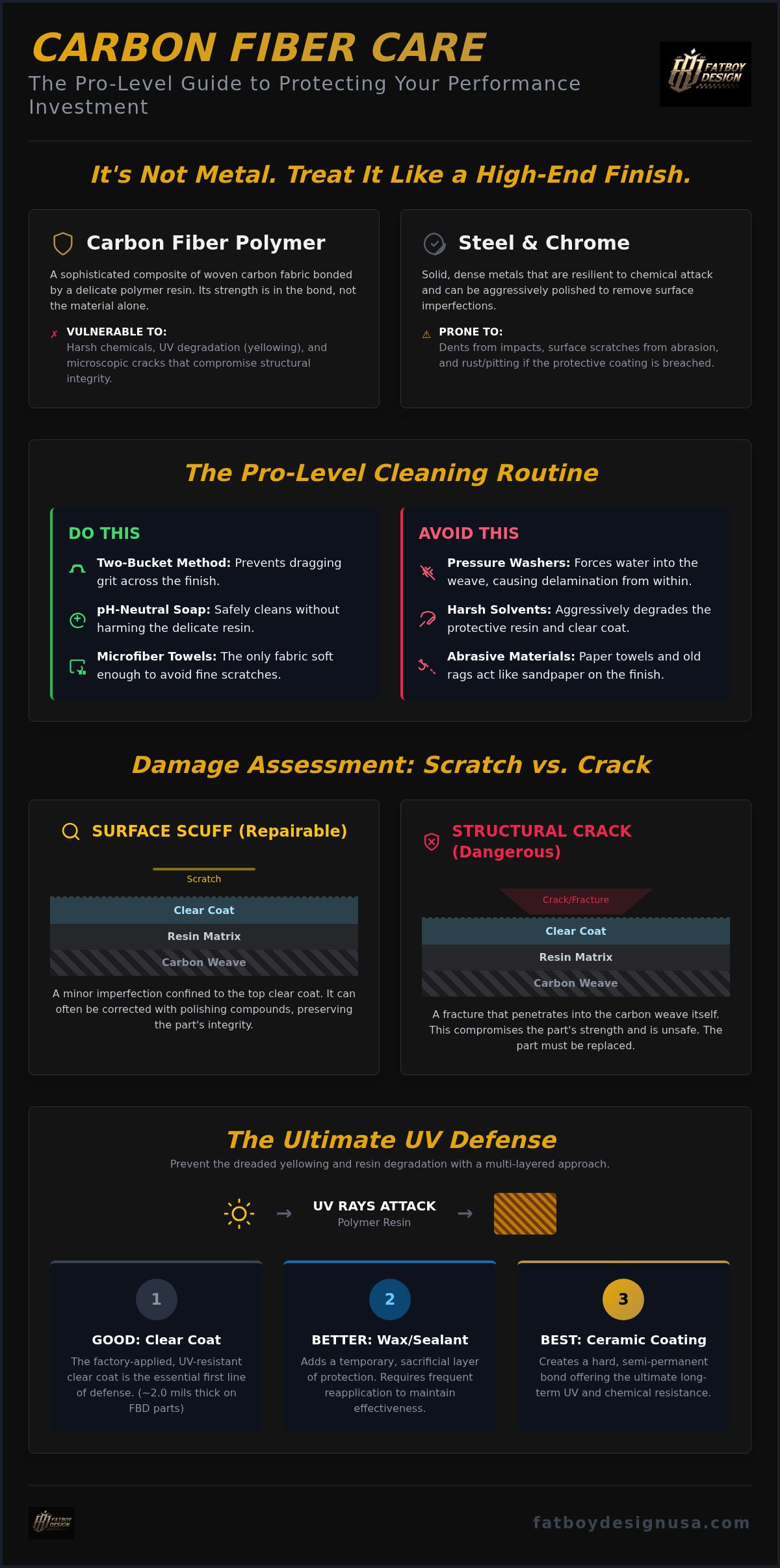
Stop treating your carbon fiber like it is just chrome with a fancy pattern. It isn't. While steel and chrome are solid hunks of metal you can scrub with abandon, your harley davidson carbon fiber is a high-tech cocktail. We are talking about Carbon-fiber-reinforced polymer; a sophisticated mix of woven fabric held together by a polymer resin matrix. This means you need to stop thinking about it as a structural piece and start treating it like a high-end finish. The resin is your shield, but it is a sensitive one. If you hit it with harsh solvents or leave it to bake in the sun without protection, that shield is going to fail. Understanding how to care for carbon fiber motorcycle parts starts with realizing that once a structural crack happens, you can't just buff it out like a scratch on a steel fender.
Performance bagger parts face a unique set of villains. You aren't just cruising to the grocery store. You are dealing with massive engine heat, road vibration, and the occasional pebble acting like a tiny missile. Metal might dent or rust, but carbon fiber manages energy differently. It is incredibly strong until it isn't. Treating your carbon with the same "good enough" attitude you use for a steel frame is a recipe for a dull, delaminated disaster. It requires a specific mindset that respects the chemistry of the build.
The Role of the Clear Coat
Your Fat Boy Design USA parts aren't just raw weave; they come rocking a high-gloss, UV-resistant clear coat that acts as the first line of defense. This isn't just for the "wow" factor at the local bike night. This layer is what prevents the dreaded "yellowing" that turns a lethal-looking bike into a dingy mess. It blocks the UV rays that try to eat your resin for breakfast. A professional-grade clear coat provides a protective barrier roughly 2.0 mils thick to ensure the resin remains shielded from environmental degradation.
Resin vs. Environment: The Silent Battle
Road salt and grime aren't just ugly; they are chemical attackers looking to degrade your resin. If you are running performance bagger parts, the stakes are even higher. Your carbon fiber front fender lives inches away from hot rotors, and your side covers deal with massive engine heat cycles. This constant thermal expansion can stress inferior parts. That is why our Platinum Series components from Fat Boy Design USA are built to handle these specific bagger-sized headaches. When you learn how to care for carbon fiber motorcycle parts, you are essentially protecting the bond between the fiber and the resin from the elements that want to tear them apart. Being the King of Carbon means respecting the chemistry that keeps your ride looking lethal.
The Pro-Level Cleaning Routine: No Scratches, No Regrets
Stop! Put down the pressure washer. You are riding a masterpiece, not a tractor. Blasting your harley davidson carbon fiber with high-pressure water is a one-way ticket to Delamination City. That force can drive moisture into the microscopic gaps between the weave and the resin. Once water gets in there, it stays. It rots the bond from the inside out. If you want to know how to care for carbon fiber motorcycle parts like a pro, you start with a gentle touch and the right tools. The two-bucket method is your new religion. One bucket holds your pH-neutral soap; the other is for rinsing the dirt off your wash mitt. This ensures you aren't just dragging road grit across your expensive finish. Rinse every inch thoroughly before a single sponge touches the surface. Any trapped grit acts like liquid sandpaper.
Microfiber is the only fabric allowed in this club. Whether you are wiping down a carbon fiber dash or cleaning your fenders, use a clean, high-gsm microfiber towel. Everything else is too abrasive. If it is not soft enough to dry a baby, it is not touching the bike. Paper towels and old t-shirts will leave fine scratches that dull the resin over time. Stick to the good stuff to keep that visual dominance intact.
Step-by-Step Washing Guide
Begin with a pre-soak. Use a pH-neutral foam to loosen the road debris without scrubbing. Let it dwell for a few minutes. When you start wiping, use straight lines. Never move in circles. Circular motions create those annoying swirl marks that catch the light and ruin your finish. Understanding how to care for carbon fiber motorcycle parts means mastering the straight-line wipe to keep your finish looking deep and lethal. Finish by drying the bike with a dedicated plush microfiber towel. This prevents water spots from etching into your clear coat.
The Chemical Blacklist: What to Avoid
Resin is a chemical compound, and it doesn't play well with others. Petroleum-based products are a major no-go because they can soften the resin over time. You need to be a gatekeeper for your bike’s chemistry. Follow the industry standards for proper care for carbon fiber and keep these five household disasters away from your ride:
- Windex: The ammonia can cloud the clear coat.
- Dish Soap: It is designed to strip grease, which means it strips your protective wax too.
- Bleach: It will oxidize the resin and kill the shine.
- Comet or Ajax: These are basically liquid rocks that will destroy your finish.
- High-acid wheel cleaners: These can cause permanent staining on the weave.
If you want that show-ready look without the stress, check out our Platinum Series parts which are built to withstand the elements better than any knock-off on the market.
Scratches vs. Cracks: Assessing Damage Like a Racer
You just rolled back into the garage after a brutal track day or a high-speed rally. Your bike looks lethal, but it is covered in road grime and battle scars. Scratches are annoying; they hurt your pride. Cracks, however, are a different animal entirely. They are dangerous. Knowing how to care for carbon fiber motorcycle parts means becoming a bit of a composite detective. You need to distinguish between a "spider web" in the clear coat and a legitimate "fracture" in the weave. A spider web is usually just the top layer of resin or clear coat reacting to a minor impact. It is cosmetic. A fracture means the actual carbon fabric has snapped. If the weave pattern looks distorted, broken, or "fuzzy," that part is compromised. Stop riding and get it checked.
Performance bagger parts live a hard life. They deal with insane engine heat and constant vibration. This is why a post-ride inspection is mandatory, not optional. Don't just glance at the big, pretty surfaces. Get down low and check the edges. Delamination, where the layers of carbon and resin start to peel apart, usually begins where the part meets the mount. If you see the edge looking thick, white, or flaky, that is a red flag. Catching these issues early is the difference between a quick fix and a total part failure at eighty miles per hour.
The Coin Tap Test for Structural Integrity
You don't need a lab to check your parts. Grab a quarter and start tapping. Move across the surface of your harley davidson carbon fiber and listen closely. You are looking for a sharp, consistent "clack" as the coin hits the material. This tells you the bond is solid. If that sound suddenly turns into a dull, hollow "thud," you have a problem. A dull sound indicates that the internal layers of the composite have separated or the resin has failed internally, even if the surface looks perfect.
Handling Minor Surface Scuffs
If you find a mark, use the fingernail test. Run your nail across the scuff. If your nail doesn't catch, you can likely polish it out. For light scuffs on your Carbon Fiber Front Fender, a fine polishing compound and a soft microfiber will restore that visual dominance. Just go easy. You are working with a thin layer of clear coat, not a thick slab of steel. If you find a minor chip from a rock, don't leave it exposed. Use a clear coat pen to seal the area immediately. This prevents moisture from sneaking into the weave and causing the resin to lift. Learning how to care for carbon fiber motorcycle parts is about being proactive so you can keep ruling the road without the repair bills.
UV Protection and Long-Term Storage Tactics
The sun is out for blood. It wants to snap those polymer chains and turn your lethal weave into a yellowed, brittle relic. If you want to know how to care for carbon fiber motorcycle parts, you have to treat the sun like the enemy it is. Avoid the "parking lot bake-off" at all costs. If you can find a spot under a tree or in the shadow of a building, take it. Your Upper Carbon Platinum Series parts deserve better than being slow-cooked in the midday heat. When you do finally throw a cover over your beast, make sure it is breathable. Trapping moisture against your resin is a rookie mistake that leads to cloudiness and long-term regret. Keep it dry. Keep it shaded. Keep it lethal.
Waxes, Sealants, and Ceramics
Carnauba wax is like a great pair of sunglasses; it looks fantastic and provides a deep, wet glow. But for long-term UV blocking, it is basically useless. It melts off faster than an ice cream cone in July. For the 2026 standard, ceramic coating is the absolute King of protection. It creates a semi-permanent bond that laughs at UV rays and sheds water like a duck. This is especially critical for high-heat areas like your Carbon Fiber Side Covers. Ceramic handles those thermal cycles without breaking a sweat. If you are a daily rider, reapply a ceramic-infused sealant every three months. Weekend warriors can usually get away with a twice-a-year schedule to maintain that visual dominance.
Winterizing Your Carbon-Clad Beast
Don't just park it and walk away when the snow starts flying. Before you put the bike into hibernation, give it a surgical-level cleaning. Any road salt or grime left on the surface will spend the winter trying to etch into your clear coat. If possible, opt for temperature-controlled storage. Rapid temperature swings cause the resin and the fiber to expand and contract at different rates. This can lead to micro-cracking over time. While the bike is resting, take a minute to check your mounting points for stress. Mastering how to care for carbon fiber motorcycle parts means being the guardian of your gear year-round. Ready to upgrade your ride with the most durable components? Grab the racer-tested harley davidson carbon fiber that won't quit when the weather gets rough.
Why Racer-Tested Parts Require Less Babying
You didn't buy a Harley to spend every Saturday afternoon with a Q-tip and a bottle of polish. You want to ride. The dirty secret of the industry is that cheap carbon fiber is a maintenance nightmare. It yellows if you look at it wrong and cracks if you hit a tiny pothole. When you invest in the King of Carbon Fiber, you are buying peace of mind. We use superior resins that are chemically engineered at the molecular level to stay clear and stay strong. High-quality parts mean you spend less time worrying about how to care for carbon fiber motorcycle parts and more time tearing up the pavement with your crew.
Our parts are built for the track, not just the showroom. Showroom carbon is thin, brittle, and basically just a sticker made of fabric. Racer-tested parts are different. They are designed to handle the brutal vibrations of a high-output V-twin and the extreme heat of a racing exhaust without delaminating. Because we control the process from the first layer of fabric to the final clear coat, we can pack our parts with UV inhibitors from the start. This isn't an afterthought; it is in the DNA of every piece we ship. You get a component that is inherently more resilient to the elements we discussed in previous sections.
The FBD Difference: Built for the Bagger Life
We have 13+ years of professional racing experience baked into every layup. That matters because the stresses on a performance bagger are unique. Our factory in Matthews, NC, follows strict standards to ensure every Bagger Racing Part can handle the real-world chaos of the road. We don't just guess where the stress points are; we know because we’ve broken them on the track so you don't have to break them on the highway. This in-house control at Fat Boy Design USA means our parts aren't just lighter; they are structurally superior. Our specific layup process makes these components significantly more resilient to the constant hum of a bagger's engine, meaning fewer "dead spots" to worry about during your coin tap inspections.
Upgrade Your Ride Today
Stop settling for heavy, dated fiberglass that cracks under pressure. It is time to join the carbon revolution and embrace a lifestyle of visual dominance. Whether you are looking for a sleek new dash or a set of lethal side covers, our full range of Harley-Davidson Carbon Fiber is ready to transform your bike into a show-stopper. You get the weight savings of a racer and the finish of a show-winner without the constant anxiety of material failure. Don't wait for your current parts to fail or fade in the sun. Check out the Platinum Series Exclusive Parts from Fat Boy Design USA and give your Harley the upgrade it deserves. Mastering how to care for carbon fiber motorcycle parts is easy when you start with the highest quality material on the planet. Let's get to work.
Rule the Road with Lethal Precision
You didn't build a beast just to let it fade into the background. Your Harley deserves components that can handle the heat and the hype. By mastering how to care for carbon fiber motorcycle parts, you've secured your spot as the King of Carbon. Remember to ditch the pressure washer, embrace ceramic coatings for ultimate UV defense, and always trust the tap test to keep your structural integrity in check. It is about protecting that visual dominance so your bike stays show-ready every single time you roll out of the garage.
At Fat Boy Design USA, we don't just sell parts; we deliver a racing legacy. Every piece in our collection is racer-tested and street-proven, backed by 13+ years of racing pedigree. We manufacture everything in-house in Matthews, NC, ensuring your gear is built for the track and the street. Stop settling for mundane materials and start riding with the best in the business. Shop the Racer-Tested Carbon Fiber Collection at Fat Boy Design USA and keep your ride looking lethal for years to come. You have the knowledge. Now get out there and own the pavement.
Frequently Asked Questions
Can I use car wax on my carbon fiber motorcycle parts?
Yes, you can use car wax, but stay away from "cleaner waxes" that contain abrasives. Stick to high-quality Carnauba or synthetic sealants that offer heavy UV protection. While wax adds a killer glow, it doesn't last forever. If you want the ultimate shield, skip the wax and go straight for a ceramic coating. It is the modern gold standard for how to care for carbon fiber motorcycle parts.
How do I fix carbon fiber that has already started to turn yellow?
Yellowing usually means the UV rays have won the battle against your clear coat. If the damage is only on the surface, a professional detailer can wet-sand the yellow layer away and spray a fresh, UV-resistant clear coat. However, if the resin itself has changed color deep inside the weave, you are looking at a permanent tan. Prevention is always cheaper than a total resin rescue mission.
Is it safe to use a buffer on my carbon fiber fenders?
You can use a buffer, but keep your ego and the RPMs in check. Carbon fiber clear coats are significantly thinner than the paint on your truck. Use a light finishing polish and a soft foam pad. If you get too aggressive or stay in one spot too long, you will burn right through to the fabric. Once you hit the weave, there is no turning back.
What happens if I get gasoline on my carbon fiber dash?
Gasoline is a solvent, and it hates your resin. If you splash some at the pump, wipe it off immediately with a clean microfiber. If you let it sit, the fuel can soften the clear coat or leave a permanent foggy stain that ruins the visual dominance of your dash. Always keep a quick detailer handy for those "oops" moments at the gas station.
How can I tell if my carbon fiber is structurally damaged after a drop?
Look for "white" stress marks or a distorted weave pattern. These are signs the fibers have snapped. You can also use the coin tap test we discussed earlier to listen for hollow, dead spots. If the part sounds like cardboard instead of a sharp "clack," the internal layers have separated. Never risk a high-speed run on a part that has lost its structural soul after a crash.
Do carbon fiber parts have a shelf life or expiration date?
High-quality carbon fiber doesn't have an expiration date like a carton of milk. If you keep it out of the sun and avoid crashing, it will outlast the engine. However, decades of heat cycles and UV exposure can eventually make the resin brittle. Starting with racer-tested parts ensures your investment stays lethal for the long haul. Learning how to care for carbon fiber motorcycle parts is the fountain of youth for your bike.
Can I paint over carbon fiber if the clear coat is peeling?
Absolutely. If your clear coat is flaking off like a bad sunburn, you can sand it down and paint right over it. It is a great way to save a structurally sound part that has lost its looks. Just make sure to use a high-quality primer designed for composites. You lose the sexy weave look, but you keep the lightweight performance. It is the ultimate stealth upgrade for any bagger.