

Performance Bagger Parts Cost Breakdown: Building a Speed Demon Without Going Broke
Stop treating your Harley like a heavy parade float. You want a bike that carves corners like a surgeon and leaves the "chrome-is-king" crowd in the dusty rearview. The truth is that most "performance" parts are just expensive jewelry that actually slows you down. If you want real speed, you need a performance bagger parts cost breakdown that prioritizes physics over vanity. Every pound you strip off is a free horsepower gain. It is time to stop guessing and start building a machine that actually handles.
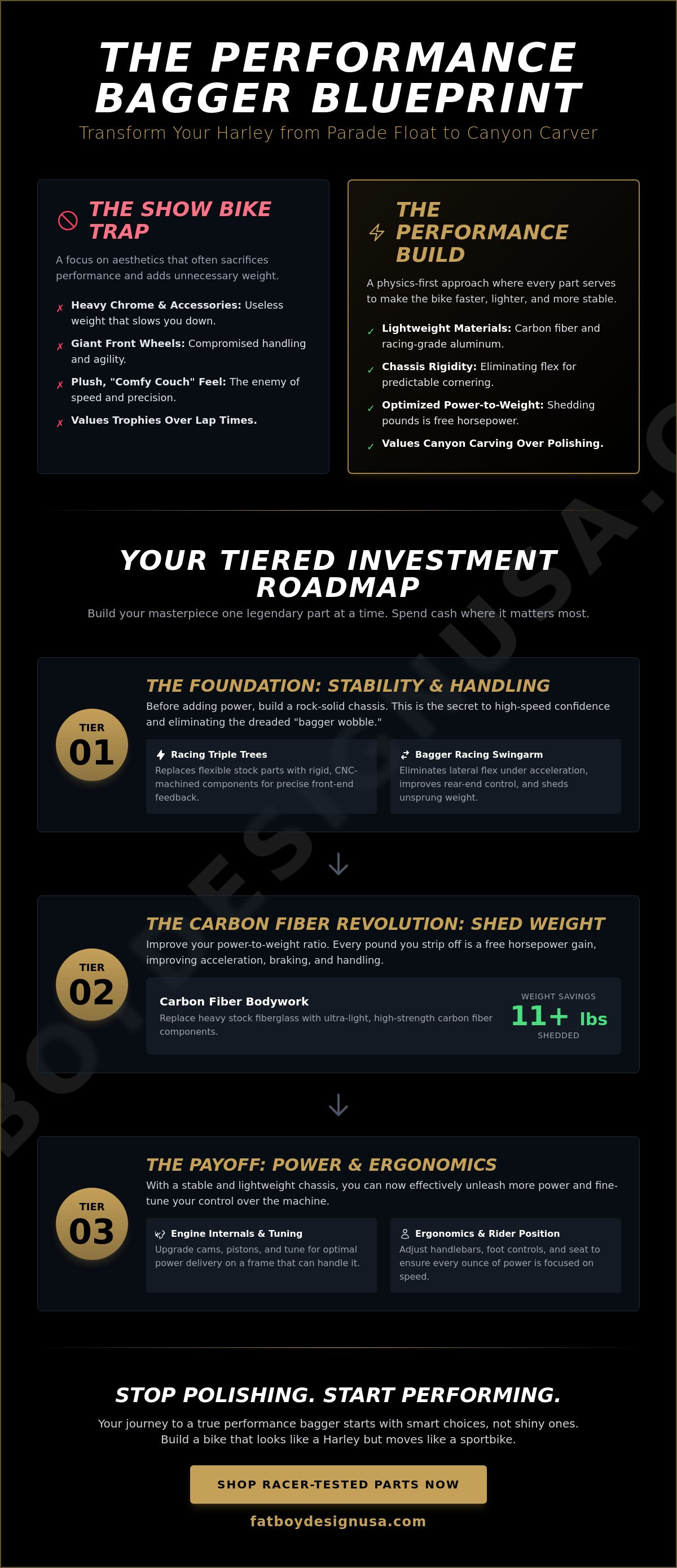
We know the struggle. You are staring at a sea of fiberglass and carbon fiber, wondering why the price gap exists. You are also likely sweating those new 2026 OBD2 regulations that could limit modified bikes to a 40 mph crawl. This guide is your racer-backed roadmap to spending cash where it actually matters. We will show you the hierarchy of upgrades, from shedding over 11 pounds with carbon fiber bodywork to finding rock-solid stability with a Bagger Racing Swingarm. You are about to learn how to build a bike that looks like a Harley but moves like a sportbike. Let's get to work.
Key Takeaways
- Reject the mundane "show bike" lifestyle and learn how to build a bagger that actually handles like a dream.
- Stop the wobble in its tracks with racing-grade swingarms and triple trees that make high-speed cornering feel like a total breeze.
- Check out our performance bagger parts cost breakdown to discover the magic math of carbon fiber weight reduction.
- Follow our tiered investment roadmap to build your "Canyon Carver" masterpiece one legendary part at a time.
- Master your bike's ergonomics to ensure every ounce of power is focused on pure, unadulterated speed.
What is a Performance Bagger? Defining the High-Speed Standard
Ditch the lawn chair and grab some real handlebars. For years, the custom scene was obsessed with giant front wheels and air ride systems that made bikes look like melted popsicles. That is the old school way of thinking. Now, we are building a performance bagger that actually shreds. This is about a machine that prioritizes function over form every single time. A standard Touring motorcycle might feel like a comfy couch, but that plushness is the enemy of speed. It's heavy, it's lazy, and it is ready for a serious diet. If your bike feels like it's steering through oatmeal, you are in the right place.
A true performance build rests on three pillars: weight reduction, handling stability, and power delivery. You cannot have one without the others. Adding a massive engine to a wobbly, stock frame is a recipe for a bad time. This is why your performance bagger parts cost breakdown looks different than a show bike build. You are spending money on things like carbon fiber and racing-grade aluminum instead of chrome floorboards and neon lights. It's a financial mindset that values lap times and canyon carving over trophies at a parking lot meet. We're here to build a beast, not a decoration.
The Evolution of the Racing Bagger
This isn't just marketing fluff. Track-tested tech from the Bagger Racing League (BRL) is finally hitting the streets. We've seen these beasts evolve from heavy cruisers into agile monsters that defy physics. When you choose racer-tested parts, you get components designed to survive 120 mph leans. Mass-produced accessories are made for the masses; racer-tested parts are made for the obsessed. They are lighter, stronger, and built to handle the brutal torque of modern performance engines. It's about taking that "King of the Baggers" energy and bringing it to your local highway.
The Performance vs. Aesthetics Debate
Looking fast is cheap and easy. Being fast takes guts and a smart budget. Don't fall for the trap of "fake" performance parts. These are heavy, cast-metal accessories that look like they belong on a track but actually add useless weight. A performance-first budget focuses on high-quality materials like harley davidson carbon fiber. You want parts that shed pounds and improve your power-to-weight ratio. Setting realistic expectations means realizing that speed costs money. However, the thrill of a bike that handles like a sportbike is worth every cent. Stop polishing and start performing.
The Structural Foundation: Stability and Handling Components
Stop trying to build a rocket on a wet noodle. It is a classic mistake. You drop five grand on engine upgrades but leave the stock frame components alone. Then you hit 90 mph and meet the "bagger wobble." It is the uninvited guest that ruins every high-speed party. If you don't fix the structural foundation first, all that extra power is just a faster way to scare yourself senseless. Stability is the secret sauce that turns a heavy cruiser into a precision weapon.
Your performance bagger parts cost breakdown should always start with the chassis. Most riders ignore this because you can't see a swingarm as easily as a shiny exhaust pipe. That is a rookie move. True performance is about how the bike talks to you through the seat and the grips. While motorcycle safety regulations focus on the basics of the road, we are focused on dominating the asphalt with total confidence and zero flex.
Triple Trees and Front-End Rigidity
Stock triple trees are usually cast pieces designed for production costs, not high-speed precision. They flex. They twist. They make the front end feel vague when you're diving into a hard corner. CNC-machined racing triple trees are a total game changer for your Harley. They provide the extreme rigidity you need to feel exactly what that front tire is doing. This isn't just about brute strength; it is about geometry. When you analyze a performance bagger parts cost breakdown, you'll see that stability components offer the highest return on investment for your actual seat-of-the-pants riding experience.
Swingarms and Rear-End Control
The rear end is where the power actually meets the pavement. A stock swingarm is often the weakest link in the chain. It flexes laterally under heavy acceleration, which is exactly where that dreaded high-speed oscillation starts. Swapping in a braced bagger racing swingarm eliminates that flex entirely. It also sheds significant unsprung weight, allowing your rear shocks to actually do their job instead of fighting the bike. Pair that with a Harley touring performance steering damper kit to kill tank-slappers before they even start. You'll finally have the control to match your engine's ambition. Ready to stop the shake? Check out our bagger racing parts to lock down your ride for good.
The Carbon Fiber Revolution: Shedding Weight to Gain Speed
Carbon fiber is the undisputed King of Materials. Period. If you still bolt heavy steel or thick fiberglass to your bike, you are dragging an anchor. In the world of high-speed builds, weight is the enemy of fun. The math is simple and beautiful. Shedding 20 pounds feels like gaining 5 horsepower. You get the speed without the headache of cracking open your engine cases. Check your performance bagger parts cost breakdown. You will see that carbon fiber offers a massive return. It totally transforms how the bike moves. It makes every twist of the throttle feel punchy. Every lean becomes effortless.
Choosing Harley-Davidson carbon fiber is the ultimate racer's choice for a reason. It is not just about the weight. It is about the brutal durability that survives the vibration of a high-output V-twin. Plus, let's be honest. The aesthetic "wow factor" of a perfect carbon weave is unmatched. It tells everyone that you value performance over chrome. You are not just building a bike; you are building a masterpiece of engineering that happens to look like a weapon. It is time to join the club of riders who prioritize physics over flash.
Unsprung Weight: The Silent Performance Killer
Unsprung weight is the weight not supported by your springs. This includes your wheels, brakes, and fenders. It is the silent killer of handling. When these parts are heavy, your suspension works twice as hard to keep the tire glued to the road. A performance bagger racer carbon fiber front fender is a functional upgrade that changes everything. By shedding weight directly from the front wheel, you allow your forks to react instantly to bumps. Lighter front-end components mean your bike tracks the road better. You get the confidence to push harder through the twisties with zero drama.
Carbon Fiber Saddlebags and Lids
Stock plastic bags are surprisingly heavy. When you swap them for carbon fiber saddlebags and lids, you remove weight from the very back of the machine. This drastically improves your bike's flickability. It makes the rear end follow the front with zero hesitation. Unlike thin fiberglass that can crack or flutter at high speeds, carbon fiber maintains its structural integrity. It is rock solid during 100+ mph runs. Including these in your performance bagger parts cost breakdown ensures you are building a balanced machine. Stop carrying the extra baggage. Start shedding the pounds and let your bike breathe.
Engine Internals and Control: Where the Power Meets the Pavement
Don't build a monster and then forget to give it a leash. You can throw every high-performance cam and piston in the catalog at your Harley, but if the internals aren't balanced, you're just making noise. A massive engine is totally useless if the crankshaft is wobbling like a drunk at a wedding. This is where your performance bagger parts cost breakdown takes a turn into the nitty-gritty details that most guys ignore. We're talking about truing and plugging that crank to ensure every bit of torque actually moves the bike forward instead of just rattling your teeth loose.
Being the "King of Carbon Fiber" isn't just about slapping on some pretty bodywork. It's a total performance mindset. It's about understanding that every component, from the balanced rotating assembly to the way you grip the bars, contributes to the ride. If you want a bike that handles like a dream and pulls like a freight train, you have to look past the surface. You've already lightened the load with carbon; now make sure the heart of the beast is beating in perfect sync.
The Overlooked Importance of Crankshaft Balancing
Vibration is the ultimate horsepower killer. It robs you of speed and slowly eats your engine from the inside out. Professional racers don't just "hope" their engines stay together; they prioritize crankshaft truing. By plugging and welding the crank, you eliminate the runout that causes catastrophic failure. A balanced rotating assembly doesn't just add longevity. It makes the engine rev faster and smoother. It's the difference between a motor that screams and one that just groans under pressure. When you look at a performance bagger parts cost breakdown, truing the crank is the insurance policy for your high-HP dreams.
Ergonomics: Risers and Control
Now, let's talk about how you actually steer this beast. Leverage is your best friend when you're carving through a canyon. Your handlebar risers are the primary point of contact between your intentions and the front wheel. Choosing the right height and pullback isn't just about looking cool at the stoplight. It's about keeping your weight centered and your arms ready for aggressive input. Rigid-mount risers give you that direct, mechanical feel, while isolated risers help kill the buzz on longer rides. You need controls that don't flex when you're hanging off the bike to hit that perfect apex. Ready to upgrade your command center? Visit fatboydesignusa.com to see the gear that keeps you in charge.
Investment Tiers: Breaking Down Your Performance Bagger Budget
Stop emptying your savings account in one afternoon. Building a monster takes a real strategy. You need a performance bagger parts cost breakdown that treats your wallet with a little respect while turning your bike into a legend. Not everyone needs a bike ready for the Bagger Racing League on day one. Most of us just want to smoke our buddies on the weekend. By breaking your build into tiers, you can prioritize the parts that deliver the biggest thrill for every dollar spent. It is about being smart, not just being rich.
You can save serious cash by using carbon fiber items strategically. You don't have to swap every plastic panel at once. Start where it counts and grow the build as you get a feel for the new handling. Here is how we break down the investment levels:
- Tier 1: The Street Slasher. This is your entry point. Focus on the rider triangle with high-quality risers and ergonomic controls. Add a carbon fiber front fender to sharpen the steering and a better windshield to cut the buffeting.
- Tier 2: The Canyon Carver. This is where things get serious. You are adding performance suspension and CNC-machined triple trees to lock down the front end. Swap in carbon fiber saddlebags to drop weight from the rear and improve flickability.
- Tier 3: The Track Beast. No compromises allowed here. You are going for the full performance bagger parts cost breakdown experience. This includes a braced racing swingarm, full carbon fiber bodywork, and deep engine internal work like crankshaft truing.
The "Must-Have" First Upgrades
If you only have a few grand to start, put it into the front end. A carbon fiber front fender and a solid set of risers offer the best "bang for your buck." You will feel the difference in every single turn. This phase keeps the bike perfectly rideable between upgrades so you don't miss the riding season. Always prioritize stability and safety over raw horsepower. A bike that stays planted at 100 mph is much faster than a high-HP bike that you are too scared to wide-open throttle.
The High-End Performance Checklist
Eventually, you will hit the point of diminishing returns. This is where you decide if you want a fast street bike or a true racer-spec machine. For the ultimate build, you might look into custom fabrication to shave those final few ounces. Building a bike that "breathes fire" is about the synergy of all these parts working together. When you reach Tier 3, every component serves a purpose. You aren't just buying parts; you are engineering a masterpiece. Keep your eyes on the goal and build a bike that makes you grin every time you crack the garage door.
Build Your Speed Demon and Leave the Couch Behind
You've got the roadmap. You've seen the performance bagger parts cost breakdown that actually makes sense. Now it is time to stop dreaming and start wrenching. Remember, a true performance build starts with stability. Don't add power until you've locked down that frame with a racing swingarm and triple trees. Then, embrace the carbon fiber revolution to shed the dead weight that is holding you back. We've spent over 13 years in the professional racing world figuring out what works and what just looks pretty. Everything we make is racer-tested and manufactured right in our shop in Matthews, NC. We don't do corporate jargon; we do speed.
You deserve a bike that handles like a beast and looks like a masterpiece. Whether you are starting as a Street Slasher or going full Track Beast, we've got the gear to get you there. It's time to join the club and stop settling for a ride that feels like a parade float. Shop the Racer-Tested Carbon Platinum Series Today and feel the difference that real engineering makes. Your bike is waiting. Let's make it legendary.
Frequently Asked Questions
Is carbon fiber really worth the extra cost for a street bagger?
Absolutely. Carbon fiber is the ultimate cheat code for gaining speed without cracking open your engine cases. It improves your power-to-weight ratio instantly. Every pound you strip off makes the bike feel punchier and more responsive in the corners. It is the smartest way to make a heavy touring bike handle like a nimble machine while looking like a total boss at the local meet.
How much weight can I actually save by switching to carbon fiber parts?
You can save over 11 pounds by swapping out your stock bodywork for a complete carbon fiber kit. This includes your front fender, tank dash, rear fender, and side covers. Removing that much weight from the chassis transforms how the suspension reacts. It makes your bike feel lighter on its feet and much easier to flick through the twisties with zero hesitation.
What is the "bagger wobble" and which parts fix it?
The wobble is that terrifying high-speed oscillation that happens when your frame and suspension can't handle the torque. You fix it by adding structural rigidity where it counts. Focus on a braced racing swingarm and CNC-machined triple trees to lock everything down. Adding a steering damper kit is also a genius move to kill those tank-slappers before they even start.
Do I need a racing swingarm if I don’t plan on going to the track?
Yes, if you enjoy aggressive street riding or carving up canyons. A racing swingarm isn't just for the track; it eliminates lateral flex during hard acceleration on the highway. It keeps your rear wheel tracking straight and true. You'll feel the difference the first time you power out of a corner and the bike stays perfectly planted instead of wallowing like a boat.
Can I install performance bagger parts myself or do I need a shop?
Most carbon fiber body parts like fenders and lids are simple bolt-on upgrades you can handle in your garage with basic tools. Structural components like triple trees or a swingarm require more mechanical skill and a bit of patience. If you're comfortable pulling your front end apart, go for it. If not, have a pro handle the heavy lifting to ensure everything is torqued to racing specs.
What is the difference between a show bagger and a performance bagger?
Show baggers are built for the parking lot with giant wheels and air ride systems that prioritize flash over function. Performance baggers are built for the open road. They prioritize speed, handling, and weight savings. A performance build focuses on carbon fiber, racing-grade suspension, and stability components that allow you to actually ride the bike hard without breaking a sweat.
Why are triple trees so important for high-speed stability?
Triple trees are the backbone of your front-end geometry and steering feel. Stock cast trees can flex and twist under pressure, leading to a vague or shaky steering experience. CNC-machined racing trees provide the extreme rigidity needed for precise feedback. They ensure that when you point the front wheel into a turn, the rest of the bike follows exactly where you want it to go.
What is the first performance part I should buy for my Harley?
Start with a carbon fiber front fender or a set of high-performance risers. These parts offer the best return on investment for your initial performance bagger parts cost breakdown. You'll feel an immediate improvement in steering response and total control over the bars. It's the perfect way to begin your journey from a heavy, lazy cruiser to a high-speed, corner-carving beast.